
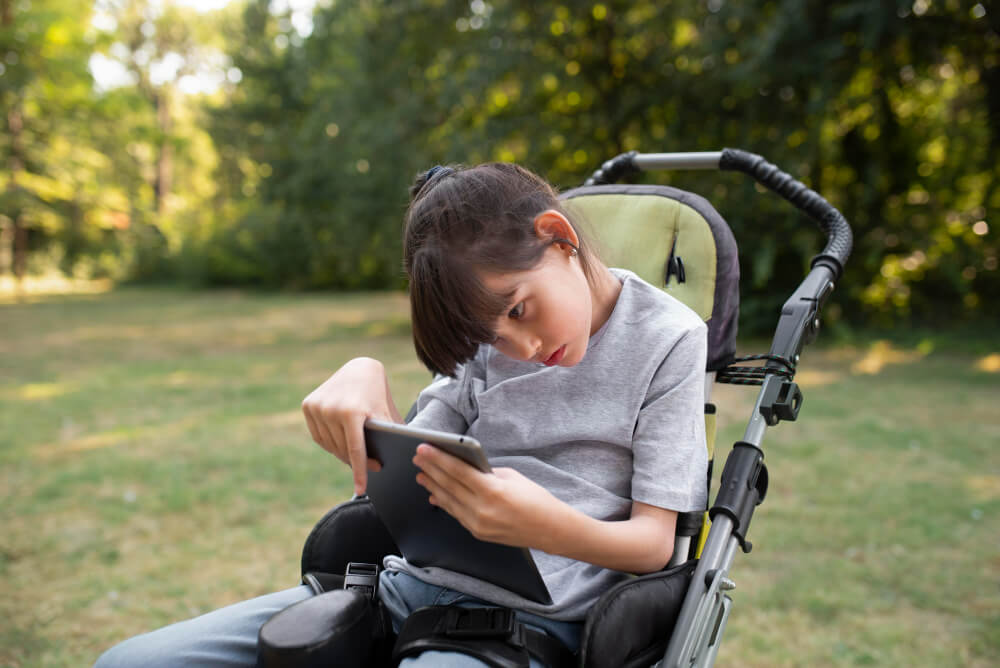
Cerebral Palsy is a group of neurological disorders that permanently affect movement, muscle coordination and posture. Symptoms often appear in infancy or early childhood.
Cerebral Palsy is due to abnormal development of the brain or damage to the brain before or after birth.
Children and adults with Cerebral Palsy exhibit a wide variety of symptoms depending on what part/parts of the developing brain were affected. Symptoms can differ in type and severity from one person to the next; however, all patients with CP have difficulties with movement and posture.
Cerebral Palsy is not progressive by nature, sometimes symptoms may; however, change over time as the child develops.
Some symptoms often seen in children with CP are as follows:
- Lack of muscle coordination when performing voluntary movements (ataxia)
- Stiff or tight muscles and exaggerated reflexes (spasticity)
- Weakness in one or more arm or leg
- Walking on the toes, a crouched gait, or a “scissored” gait
- Variations in muscle tone (too stiff, or too floppy)
- Shaking (tremor) or random involuntary movements
- Delays in reaching motor skill milestones
- Difficulty with precise movements such as writing or buttoning a shirt There are a variety of conditions that are often associated with CP:
- Intellectual disability
- Delayed growth and development
- Impaired vision
- Hearing loss
- Seizures or epilepsy
- Malnutrition
- Inactivity
- Speech and language disorders
- Difficulty with sensations
- Infections and long term illnesses
- Decreased bone health There are four main types of CP:
- Spastic Cerebral Palsy: This is the most common type of CP. These patients suffer from stiff muscles, limbs and awkward movements.
- Dyskinetic Cerebral Palsy: characterized by slow uncontrollable writhing or jerking movements in the feet, hands, arms, or legs.
- Ataxic Cerebral Palsy: characterized by poor coordination and balance, they struggle with depth perception and may walk unsteadily.
- Mixed type: Mixed type CP generally are a mix of presentations and will have some muscles that are too tight and some that are too floppy. Treatment: Cerebral Palsy does not have a cure; however, treatment can improve a child’s capabilities and quality of life. Generally the earlier treatment is begun the better the outcomes for the child in terms of overcoming areas of developmental disability. Below are just a few of the allied health professionals that may be involved in the care of a child with CP. Physiotherapy is usually a cornerstone of cerebral palsy treatment in the early years of the child’s life. Depending on the individual, treatment may include specific strength and conditioning programs, active and passive stretching, resistive training, balance exercises and activity programs all aimed at maintaining or improving muscle strength, balance, motor skills and preventing contractures. Occupational Therapy is important to optimise the functioning of the upper limbs in performing activities of daily living. They help the patient to create new ways of performing necessary, routine tasks in the home, at school and in the community. Speech Pathologist: Speech therapists work with their patients on language, verbal and non verbal forms of communication. They also play an important role in helping patients with eating and swallowing. The treatment team for cerebral palsy is often large and multidisciplinary in nature. Who is needed as part of your team will depend on the diagnosis, severity of the condition and the areas of developmental disability. We all work together to ensure a holistic, streamlined and individualized approach to care.
REFERENCE:
National Institute of Neurological Disorders and Stroke (NINDS). (n.d). Cerebral Palsy. [online] Available at: https://www.ninds.nih.gov/health-information/disorders/cerebral-palsy [accessed 27 May 2024]